



← Back to the Garden Trouble Calendar
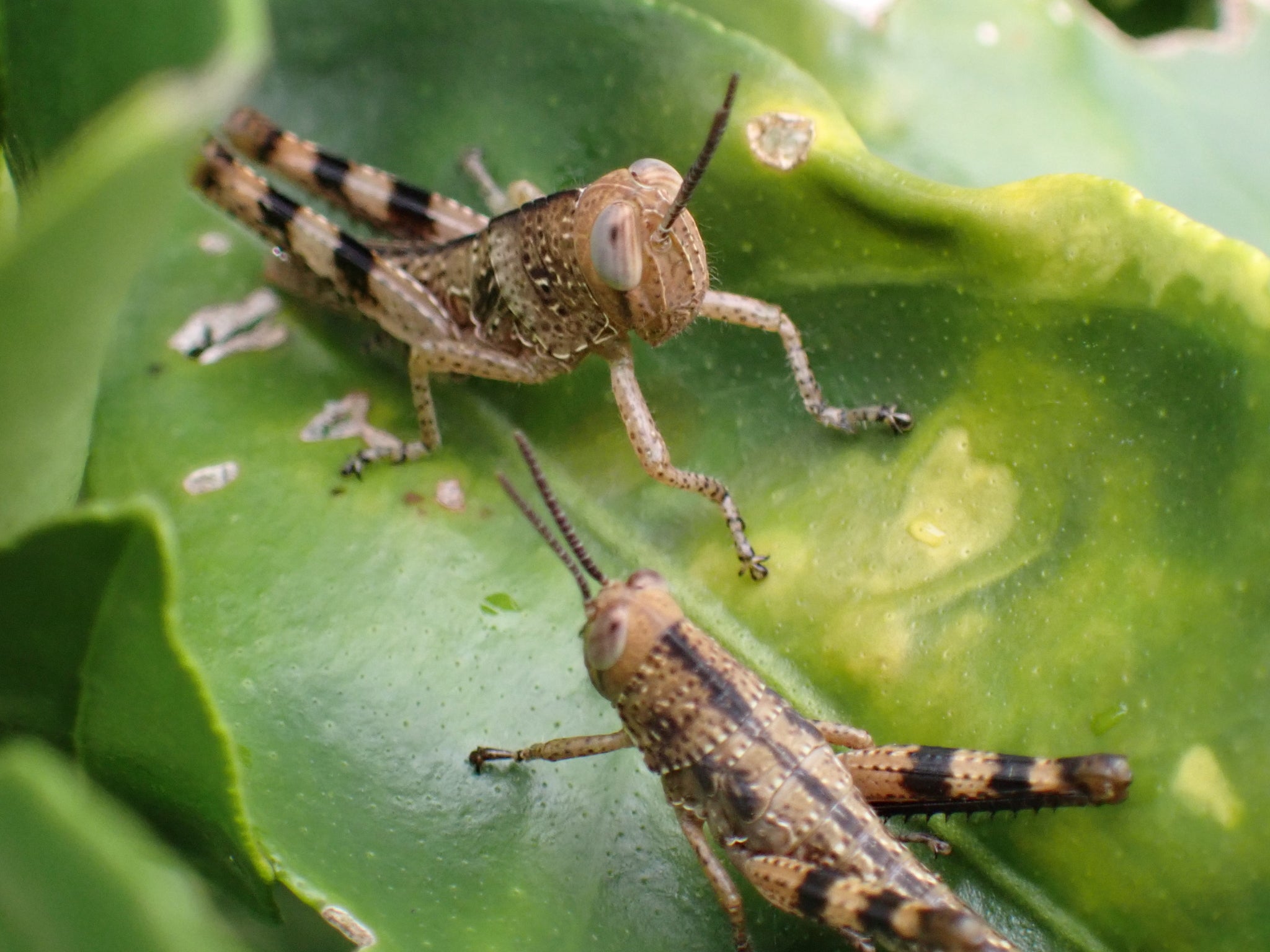
Grasshoppers — including big ones like the Australian giant grasshopper — chew ragged holes in leaves, and in plague years locusts can strip a patch fast. A few are no drama; it's the numbers that hurt.
Also known as: locusts.
How do I spot them?
- Chewed, ragged leaf edges and holes, sometimes whole seedlings gone.
- The grasshoppers themselves, well camouflaged among the foliage.
- Worst in warm, dry weather, especially along grassy garden edges.
Which plants do they target?
Growing any of these? See our guides to lettuce, silverbeet and beans.
Almost anything leafy — lettuce, silverbeet, beans and young seedlings first.
How do I manage them safely?
- Netting is the most reliable protection for prized crops and seedlings. Our Grow Frame beds (and the kit, shipped Australia wide) have the frame built in, so insect mesh goes on the sides and top with a staple gun and stays put.
- Hand-pick in the cool of the morning, when they're slow.
- Encourage birds, lizards and praying mantises — a lively garden keeps numbers down.
- Keep grassy edges mown, where the eggs are laid.

Grow Frame: a raised garden bed built to take a net
All four legs run up to a timber top rail, 1.8 m tall delivered in South East Queensland or 1.6 m as a kit shipped Australia wide. Throw a bird net over the top, staple insect mesh to the sides or screw aviary mesh into the bays. It comes bare, so you only buy the cover your pests need.
Sprays do little against mobile adults — exclusion and predators are the go. For the bigger picture, see our guide to managing pests and problems safely.
Plan your patch: our free garden calendar shows what to plant now where you live. Ready to grow? Browse our raised garden beds or build your own with the garden bed builder.
Image: Auradyme, CC BY 4.0, via Wikimedia Commons.