



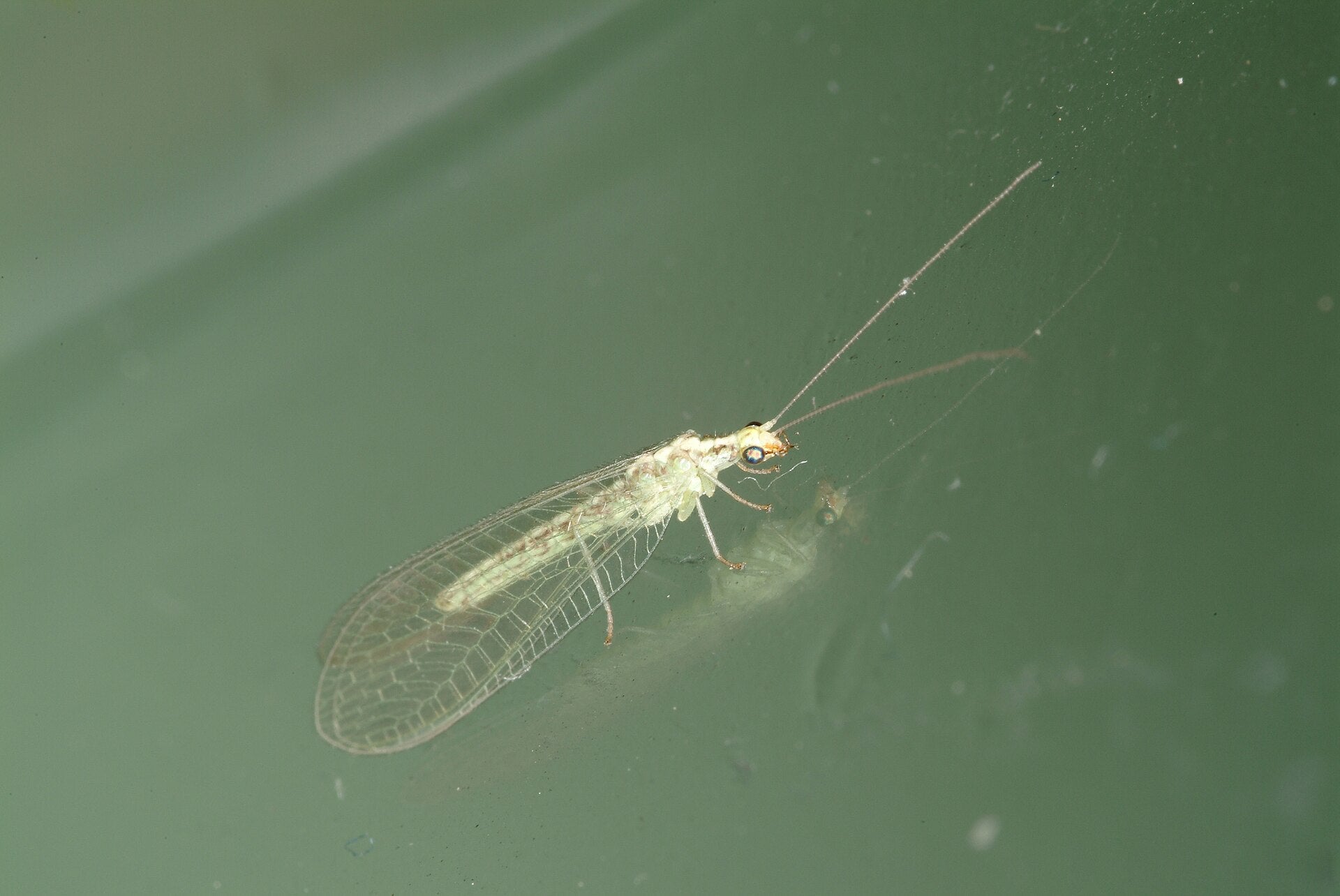
Green lacewings are one of the hardest-working predators you can have. The delicate, lacy-winged adults are pretty enough, but it's their larvae — nicknamed “aphid lions” — that do the real work, hoovering up soft pests by the hundred.
What do they eat?
Aphids are the favourite, but the larvae also take mites, thrips, whiteflies, mealybugs, small caterpillars and insect eggs.
How do I spot them?
- Adults about 15 mm, pale green with clear, net-veined wings and golden eyes.
- Larvae small, flat and brown-and-cream with pincer-like jaws — a bit like a tiny alligator.
- Tiny white eggs, each on a fine thread-like stalk, on the underside of leaves.
How do I attract and keep them?
Lacewings love nectar as adults, so flowers like dill, coriander, cosmos and alyssum bring them in. Plant a variety of flowers among your veggies (see our companion planting guide), go easy on sprays that kill the good bugs along with the bad, and leave a shallow dish of water out in hot weather.
Leave a few aphids about to keep the lacewings fed and on patrol — along with ladybirds, they're your front line. For the full approach, see our guide to managing pests the safe way.
Image: Joseph Berger, CC BY 3.0 us, via Wikimedia Commons.