



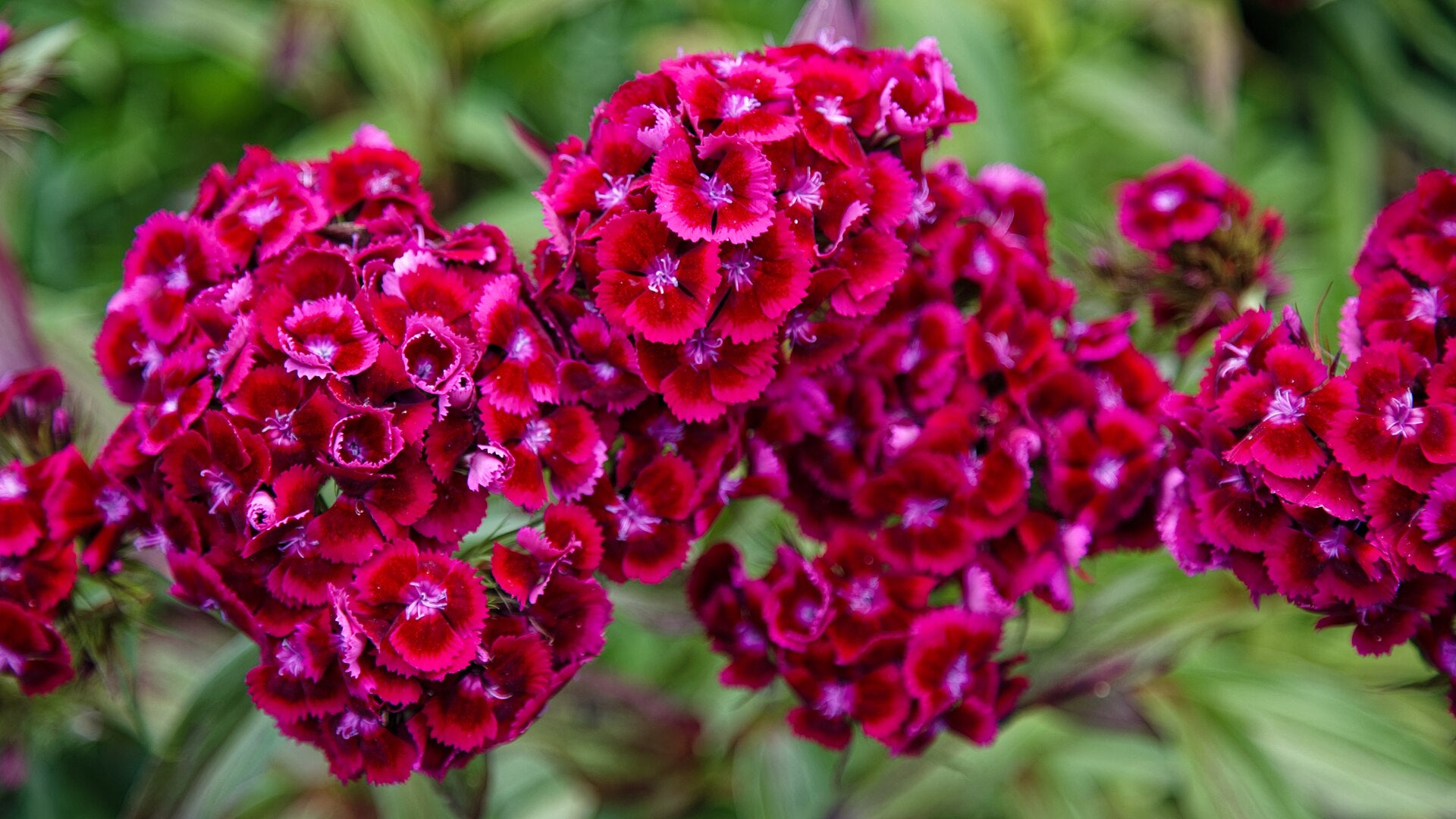
Dianthus (pinks and Sweet William) offer frilled, clove-scented, edible flowers on tidy, hardy plants — perfect for the edge of a raised bed, where their sweet perfume can be enjoyed up close.
Quick facts
- Position: full sun
- Spacing: 20–25 cm apart
- Tub depth: our 23 cm+ depth; good drainage
- Time to harvest: from planting, seasonally
When should I plant dianthus?
Plant in autumn or spring. Many dianthus are short-lived perennials or biennials that flower generously for a season or two. Our free garden calendar shows the right months for your postcode.
- Subtropical (Brisbane & SEQ): March to June
- Temperate (Sydney, Melbourne, Adelaide, Perth): March to May and September to November
- Cool & mountain (Tasmania, Canberra, highlands): September to November
- Tropical (Cairns, Darwin): April to May
- Arid inland: March to April and September to October
How do I grow dianthus in a raised bed?
Plant into free-draining mix in full sun — they dislike wet feet, which a raised bed avoids. Deadhead to keep them blooming and compact.
How do I use it?
The petals are edible with a mild clove flavour (trim off the bitter white base) — lovely in desserts and drinks. The flowers are also great for bees and butterflies.
What pests attack dianthus?
Keep an eye out for aphids, though flowers are seldom much bothered. See our safe pest guide.
What are the common problems with dianthus?
The main one to watch is rust, usually in damp, crowded conditions. Good airflow prevents most.
Where should I plant it?
A pretty, fragrant edging plant; grows well among other cottage flowers. See our companion planting guide.
More growing guides: cornflowers, pansies & violas and calendula.
Plan your patch: our free garden calendar shows what to plant now where you live. Ready to grow? Browse our raised garden beds or build your own with the garden bed builder.
Image: Acabashi, CC BY-SA 4.0, via Wikimedia Commons.