



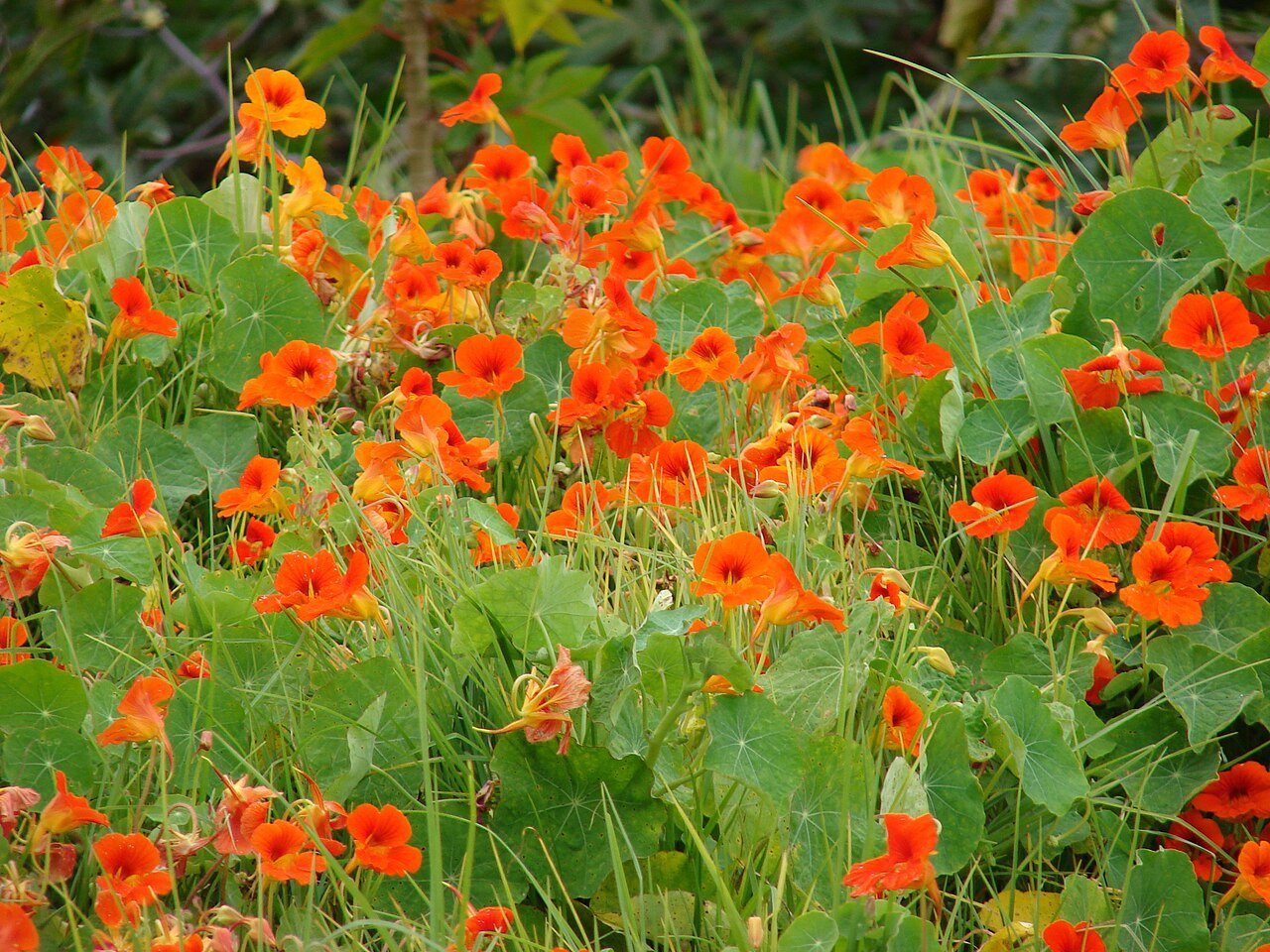
Nasturtiums are the ultimate companion flower — cheerful, edible, and a brilliant living lure that draws aphids away from your veggies. They all but grow themselves, spilling colourfully over the edge of a raised bed.
Quick facts
- Position: full sun to part shade
- Spacing: 30 cm apart
- Tub depth: our 23 cm depth
- Time to harvest: 6–8 weeks to flower
When should I plant nasturtiums?
Nasturtiums are frost-tender but easy — sow seed directly from spring through summer. They self-seed happily once you have them. Our free garden calendar shows the right months for your postcode.
- Subtropical (Brisbane & SEQ): March to September
- Temperate (Sydney, Melbourne, Adelaide, Perth): September to February
- Cool & mountain (Tasmania, Canberra, highlands): October to December
- Tropical (Cairns, Darwin): April to July
- Arid inland: March to April and August to October
How do I grow nasturtiums in a raised bed?
Sow big seeds straight into the mix, even poor soil — too much feeding gives all leaf and few flowers. Let them trail over the edge or climb a low support.
How do I use it?
The leaves, flowers and seed pods are all edible, with a peppery, watercress-like bite — lovely in salads. As a trap crop, they lure aphids and cabbage-white caterpillars away from your food plants.
What pests attack nasturtiums?
Keep an eye out for aphids and caterpillars, though flowers are seldom much bothered. See our safe pest guide.
What are the common problems with nasturtiums?
The main one to watch is mosaic virus, usually in damp, crowded conditions. Good airflow prevents most.
Where should I plant it?
Plant them among and around your veggies as a trap crop and pollinator draw; they're a classic partner to cucumbers, beans and brassicas. See our companion planting guide.
More growing guides: calendula, borage and French marigolds.
Plan your patch: our free garden calendar shows what to plant now where you live. Ready to grow? Browse our raised garden beds or build your own with the garden bed builder.
Image: Forest and Kim Starr, CC BY 3.0, via Wikimedia Commons.