


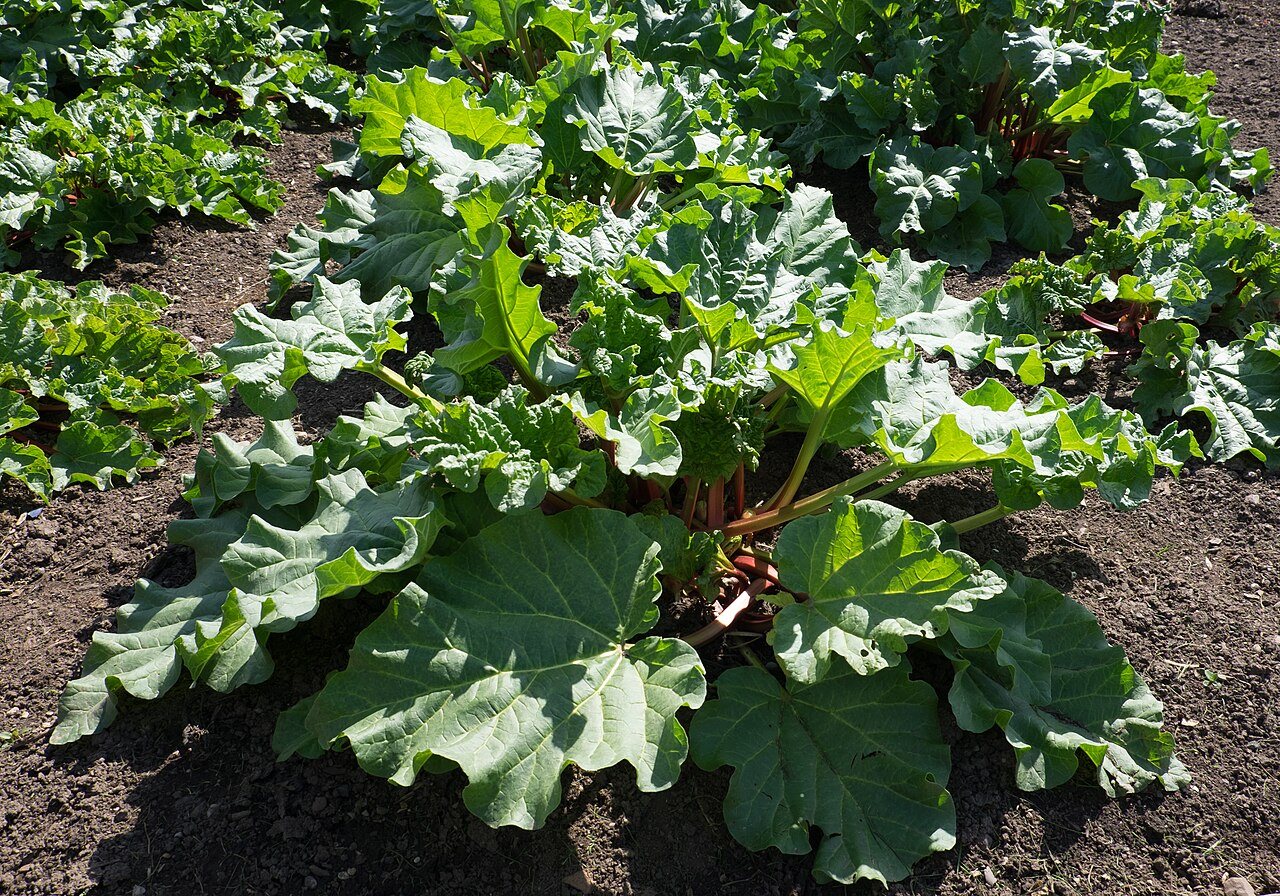
Rhubarb is a handsome, hardy perennial grown for its tart red stalks — the backbone of crumbles and jams. Plant a crown in a raised bed and it'll reward you every spring for years with almost no effort.
Quick facts
- Position: full sun to part shade
- Spacing: one plant per 1 m
- Tub depth: our 41 cm depth; permanent
- Time to harvest: light picking from year 2
When should I plant rhubarb?
Plant crowns in winter to early spring into a permanent spot — rhubarb crops for many years, so give it room. It grows best where winters are cool. Our free garden calendar shows the right months for your postcode.
- Subtropical (Brisbane & SEQ): May to August
- Temperate (Sydney, Melbourne, Adelaide, Perth): June to September
- Cool & mountain (Tasmania, Canberra, highlands): June to September
- Tropical (Cairns, Darwin): Not really suited to this zone
- Arid inland: June to August
How do I grow rhubarb in a raised bed?
Plant the crown with the bud just at the surface in rich, free-draining mix. Don't harvest the first year while it establishes. Remove flower stalks as they appear to keep energy in the stems. Note: only the stalks are edible — the leaves are toxic.
How often should I water and feed rhubarb?
Water well through the warm months and feed generously each spring — rhubarb is a hungry, thirsty plant.
What pests attack rhubarb?
Keep an eye out for aphids and slugs and snails. Most are easily managed — see our safe pest guide.
What diseases affect rhubarb?
The main ones are leaf spot. Good airflow, morning watering and steady moisture prevent most.
What grows well with rhubarb?
A long-lived perennial; give it a permanent corner of a bed. See our companion planting guide.
When do I harvest rhubarb?
From year two, pull (don't cut) the outer stalks by twisting them from the base, taking no more than half at once. Discard the leaves — they're poisonous.
More growing guides: asparagus, globe artichokes and sorrel.
Plan your patch: our free garden calendar shows what to plant now where you live. Ready to grow? Browse our raised garden beds or build your own with the garden bed builder.
Image: DeFacto, CC BY-SA 4.0, via Wikimedia Commons.