



← Back to the Garden Trouble Calendar
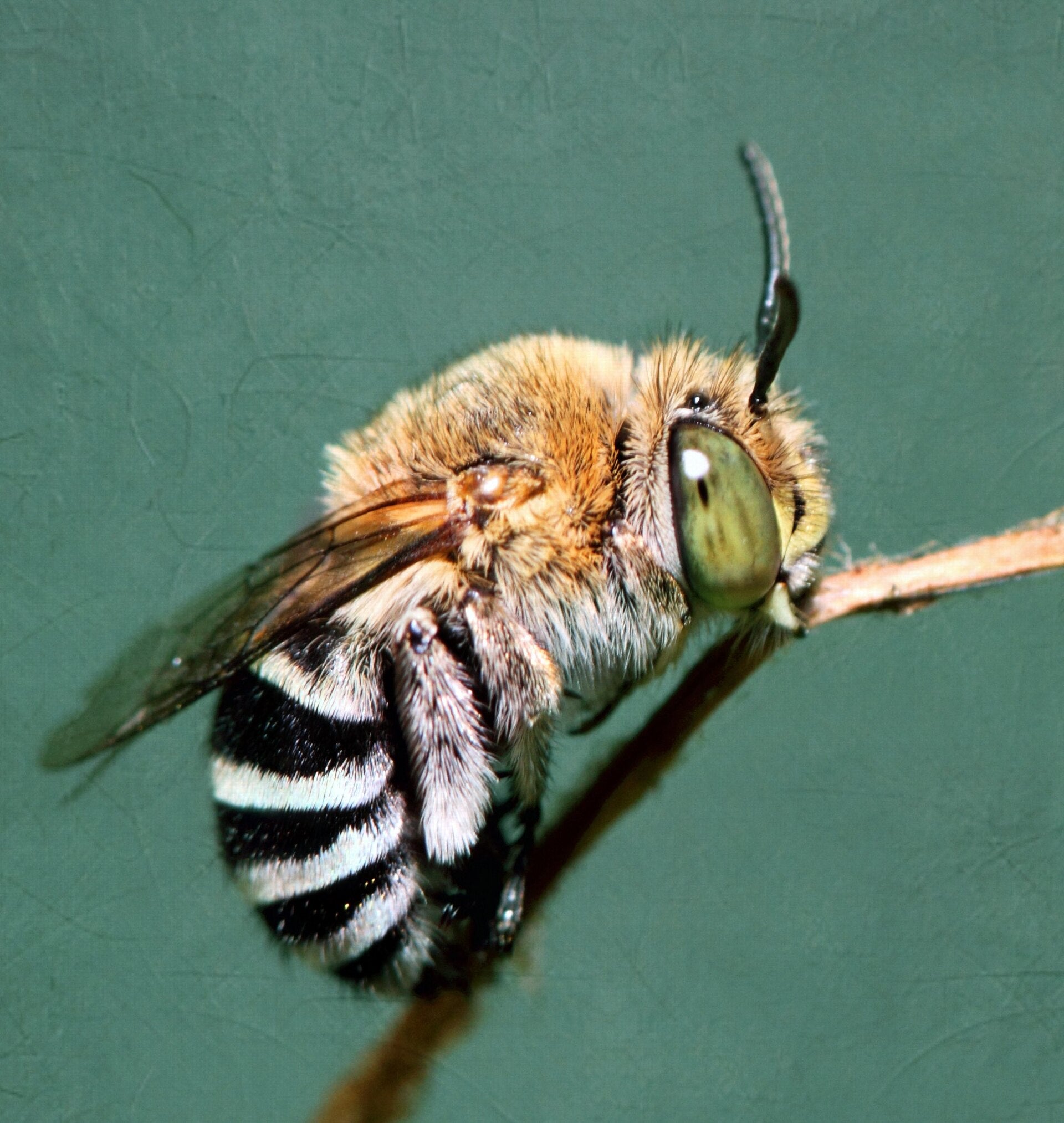
You'll know the blue-banded bee by its shimmering blue stripes and fast, darting flight. Australia has over 1,700 native bee species, and most are solitary, gentle, and brilliant for a veggie patch.
Why are they worth rolling out the welcome mat?
Pollination — and native bees beat honeybees at some jobs. The blue-banded bee does buzz pollination: it grabs a flower and vibrates at just the right pitch to shake the pollen loose. That's exactly what tomatoes, capsicums, chillies and eggplants need for a heavy fruit set. More native bees means more, and better-shaped, fruit.
What's the catch?
None worth worrying about. Solitary natives are gentle and non-aggressive, and many can't sting you at all. Just about the only way to lose them is to spray insecticides or leave them nowhere to nest.
What should I do?
Welcome them in. Plant flowers they love — they're drawn to blue and purple, so borage, salvia and lavender are magnets. Leave a patch of bare, undisturbed soil or pop in a bee hotel for nesting. And — no insecticides. For the whole team of garden helpers, see our beneficial wildlife guides.
Not sure whether the bug you've spotted is friend or foe? Our Garden Trouble Calendar shows the pests and diseases that are actually active in your area right now — everything else is usually one of the good guys.
Image: aussiegall from sydney, Australia, CC BY 2.0, via Wikimedia Commons.