



← Back to the Garden Trouble Calendar
What is it?
Downy mildew is a fungal-like disease that, unlike powdery mildew, works on the underside of leaves and needs cool, damp conditions. It moves fast in wet weather and is common on lettuce, brassicas, cucurbits and peas.
How do I spot it?
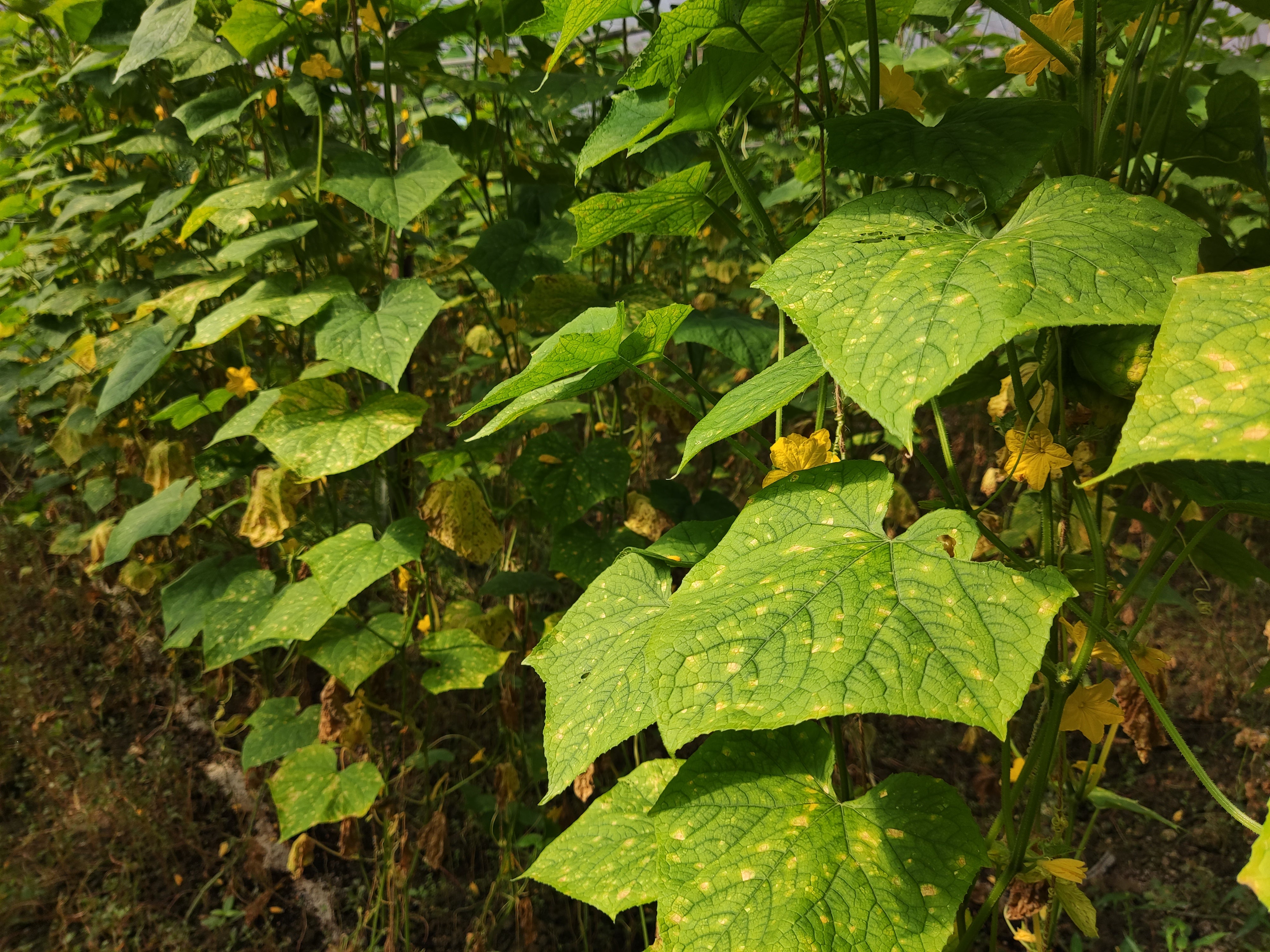
- Pale yellow or angular patches on the top of the leaf, boxed in by the leaf veins.
- A greyish-purple, downy fuzz on the underside, directly below those patches.
- Leaves that brown, curl and die from the affected areas outward.
- It spreads upward from the older, lower leaves.
Which plants does it affect?
Growing any of these? See our guides to lettuce, kale, cauliflower, onions, rocket and spinach.
Lettuce, brassicas (cabbage, broccoli, kale), cucumber, pumpkin, zucchini, peas, spinach and grapes are the usual targets.
What causes it, and how does it spread?
Cool nights, high humidity and leaves that stay wet are the triggers. Spores spread in splashing water and on the wind, so overhead watering and crowded beds make it worse.
How do I prevent it?
- Space plants for good airflow — easy to plan in a raised bed.
- Water the soil, not the leaves, and water in the morning.
- Choose resistant varieties and rotate your crops each season.
- Clear away old, affected leaves so spores don't overwinter.
How do I manage it?
- Pick off and bin affected leaves as soon as you see them (don't compost them).
- Open the plant up for airflow and ease back on watering.
- If it keeps spreading, a copper-based spray is the fallback.
For the bigger picture, see our guide to managing pests and problems safely.
Plan your patch: our free garden calendar shows what to plant now where you live. Ready to grow? Browse our raised garden beds or build your own with the garden bed builder.
Image: Wee Hong, CC BY-SA 4.0, via Wikimedia Commons.