



← Back to the Garden Trouble Calendar
What is it?
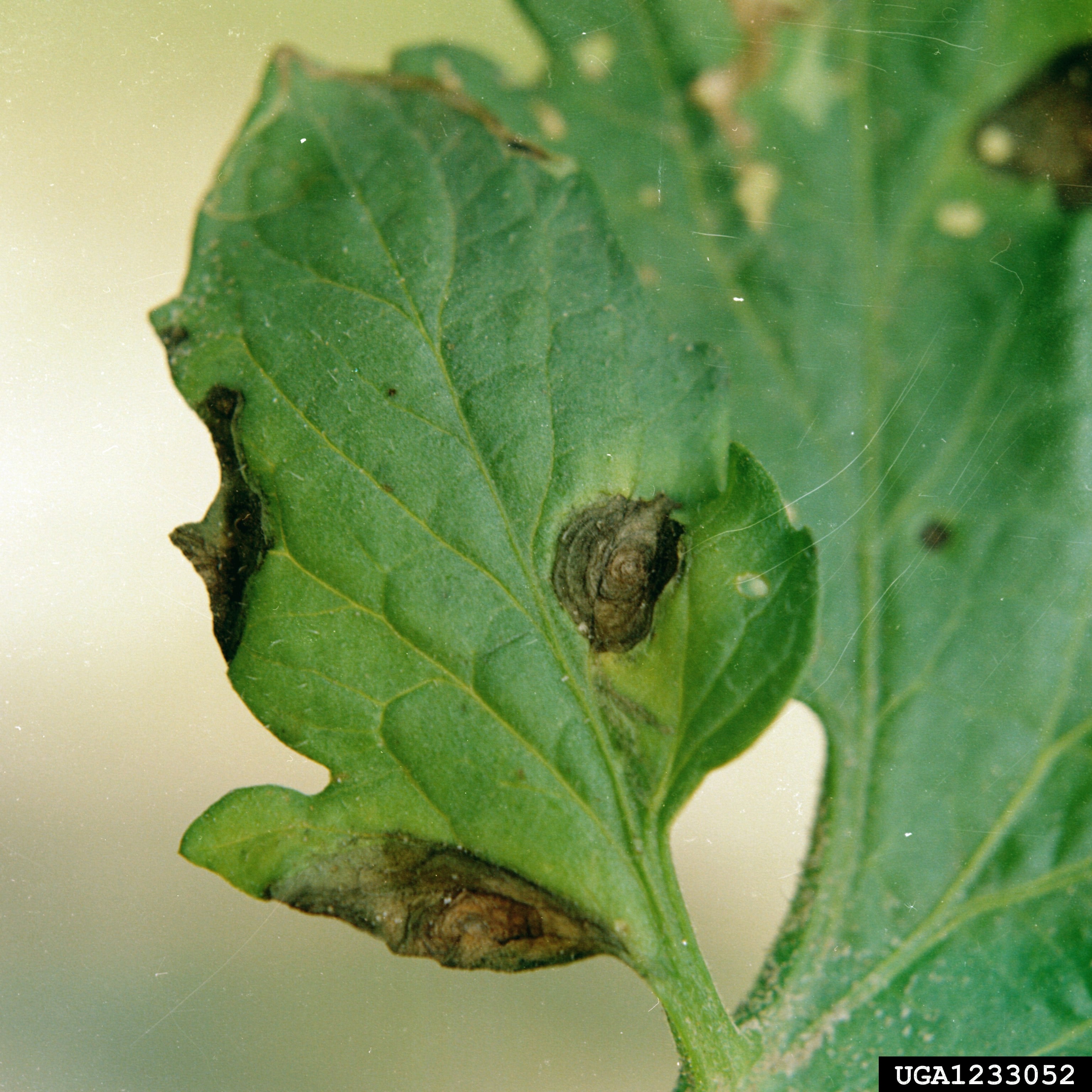
Early blight is a fungal disease (Alternaria) that makes distinctive target-shaped spots on leaves. It's common on tomatoes and potatoes. (Its faster, wetter-weather cousin, late blight, collapses plants quickly — the prevention below helps with both.)
How do I spot it?
- Brown spots with concentric rings, like a little bullseye or target.
- Starts on the lower, older leaves first, with yellowing around each spot.
- Leaves yellow, brown and drop; spots can appear on stems and fruit too.
Which plants does it affect?
Growing any of these? See our guides to tomatoes and potatoes.
Tomatoes and potatoes mainly, plus capsicum and eggplant.
What causes it, and how does it spread?
Warm, humid weather and wet leaves. The fungus survives in the soil and in old plant debris, then splashes up onto the lowest leaves when it rains or you water from above.
How do I prevent it?
- Mulch well to stop soil splashing up onto the leaves.
- Water the soil in the morning, never the foliage.
- Stake and space plants for airflow, and rotate crops each year.
- Clear away old debris at the end of the season.
How do I manage it?
- Remove affected leaves promptly and bin them (don't compost).
- If it's taking hold, a copper fungicide is the fallback.
For the bigger picture, see our guide to managing pests and problems safely.
Plan your patch: our free garden calendar shows what to plant now where you live. Ready to grow? Browse our raised garden beds or build your own with the garden bed builder.
Image: Clemson University – USDA Cooperative Extension Slide Series, Bugwood.org, CC BY 3.0, via Wikimedia Commons.