



← Back to the Garden Trouble Calendar
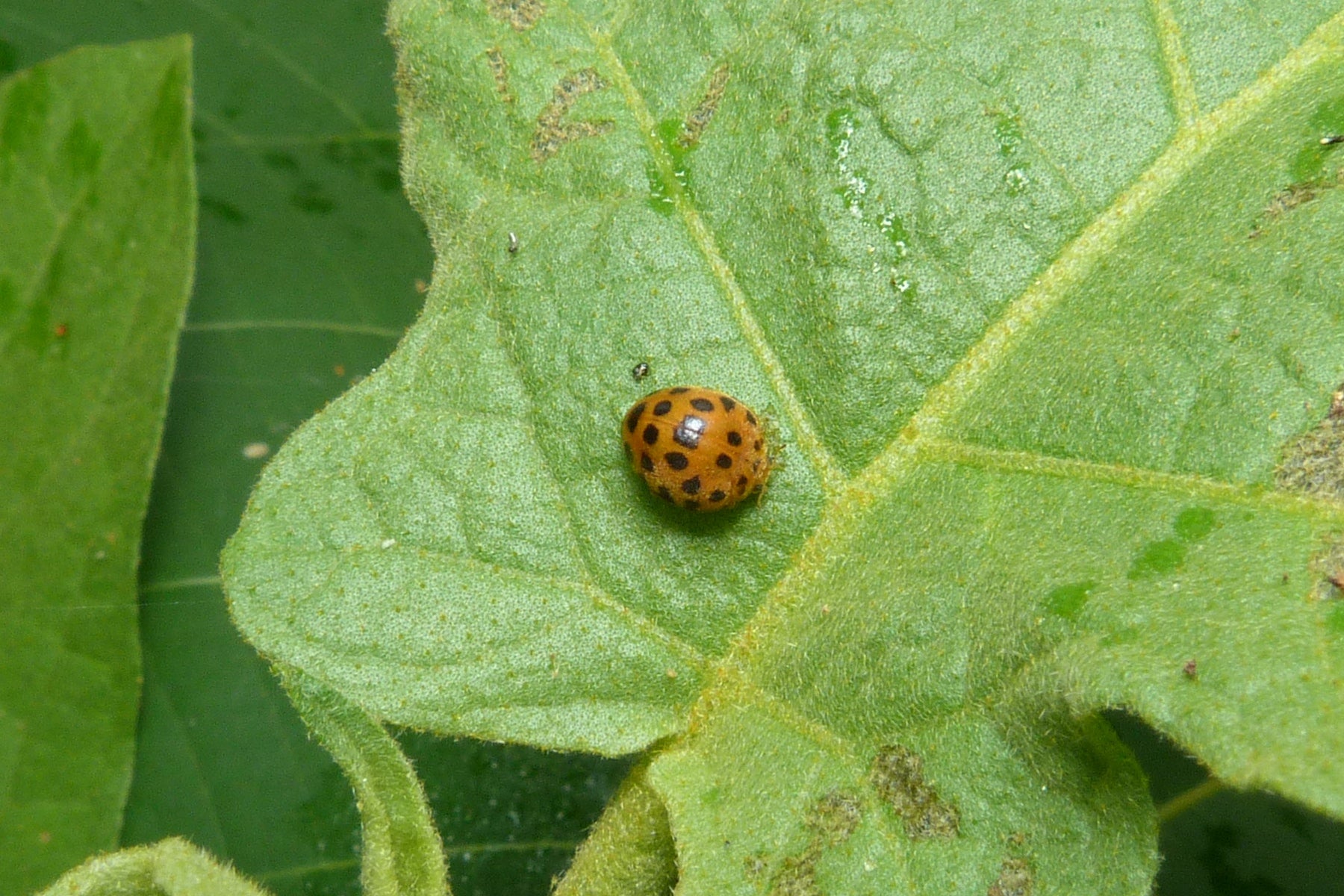
Not every ladybird is your friend. The 28-spotted ladybird is the exception — unlike the helpful kinds that eat aphids, this one eats your leaves. It's well worth learning to tell them apart before you squash anything (see our guide to ladybirds).
Also known as: leaf-eating ladybird, potato ladybird.
How do I spot it?
- A dull orange ladybird with 28 spots and a faint downy sheen — the good ladybirds are shiny with fewer spots.
- Lacy, skeletonised patches grazed from the surface of the leaf.
- Yellow egg clusters and spiky larvae on the undersides of leaves.
Which plants does it target?
Growing any of these? See our guides to tomatoes, beans, potatoes, eggplant and pumpkins.
Potatoes, tomatoes, beans and cucurbits (pumpkin, zucchini, cucumber).
How do I manage it safely?
- Hand-pick the adults, larvae and egg clusters — check leaf undersides.
- Neem oil deters feeding; a pyrethrin spot-spray for heavy numbers.
- Clear away crop debris where they shelter, and rotate your crops.
Just be sure it's the 28-spotted one and not a helpful ladybird first. For the bigger picture, see our guide to managing pests and problems safely.
Plan your patch: our free garden calendar shows what to plant now where you live. Ready to grow? Browse our raised garden beds or build your own with the garden bed builder.
Image: Donald Hobern, CC BY 2.0, via Wikimedia Commons.