

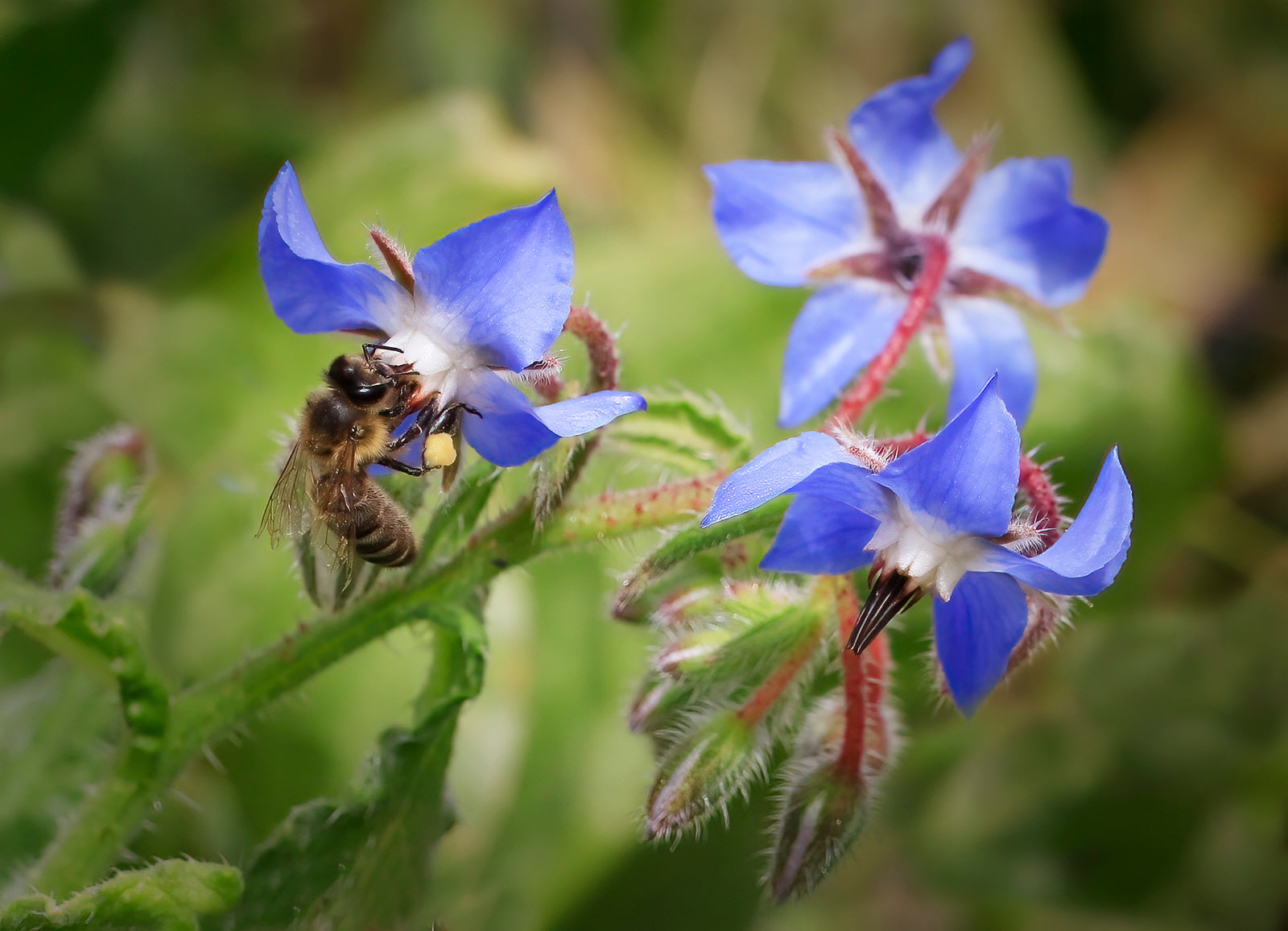
Neonicotinoids — “neonics”, like imidacloprid and acetamiprid — are systemic insecticides: the plant absorbs them, so the whole plant becomes toxic to insects that feed on it. They're effective, but a major concern for bees, and we don't recommend them for a food garden.
What are they used against?
Sap-suckers and chewers like aphids, thrips and caterpillars, plus ants and other pests.
Why do we steer clear of it?
- Strongly linked to bee and pollinator decline — and your veggie patch needs those pollinators.
- Being systemic, they end up throughout the plant, including in pollen, nectar and the parts you eat.
- They can persist in soil and water.
What safer alternatives would we use instead?
- Insecticidal soap or neem oil for aphids and thrips.
- Bt for caterpillars.
- Beneficial insects and netting.
Great pollination is one of the joys of a backyard patch — we'd never trade it for a neonic. For the bigger picture, see our guide to managing pests safely.
Plan your patch: our free garden calendar shows what to plant now where you live. Ready to grow? Browse our raised garden beds or build your own with the garden bed builder.
Image: Cuminox, CC BY-SA 4.0, via Wikimedia Commons.