



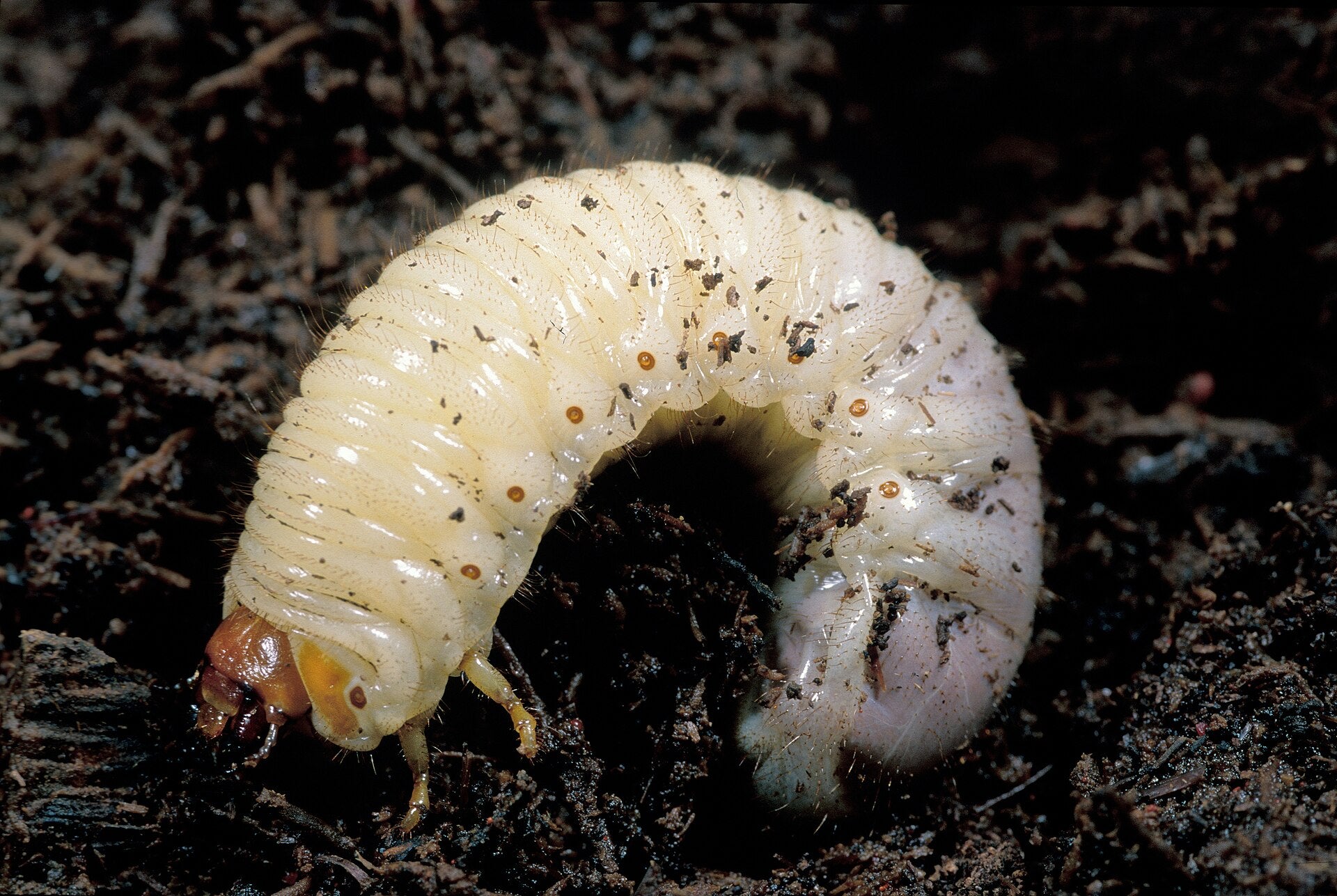
Curl grubs are the larvae of scarab beetles — Christmas beetles, African black beetles and their cousins. They're fat, C-shaped, creamy-white grubs with a brown head, and they live below the surface eating roots. The classic giveaway: a plant that wilts and sulks no matter how much you water it, because underneath, its roots are quietly disappearing.
How do I spot them?
Pull gently on a struggling plant — if it lifts out with barely any roots attached, go digging. Curl grubs sit in the top 5–10cm of the mix: 1–4cm long, creamy white with a brown head and a darker tail end, and they curl into a tight C the moment you disturb them. Above the surface, look for seedlings that yellow and wilt one after another in the same patch of bed while the mix stays moist.
Are all curl grubs a problem?
No — and this catches a lot of gardeners out. A near-identical looking grub in your compost bin or worm farm is usually a flower beetle or fruit beetle larva doing honest work as a decomposer: leave it to it. The rule of thumb is location: found in compost = composter, found under a dying plant = culprit. Only the ones living among roots in your growing mix are eating your garden.
Which plants do they attack?
Anything with tender roots, seedlings first. In a raised bed the usual victims are leafy greens, strawberries and young root veg. (Lawns cop it worst of all — dead brown patches that peel back like carpet — but that's a lawn problem, not a bed problem.)
How do I manage them safely?
Hand-picking wins. Turn over the top 10cm of mix whenever you replant and collect what you find — magpies, butcherbirds and chooks treat curl grubs as lollies, so toss the grubs on the lawn and let the local birds do the rest (blue-tongues love them too). For a bigger outbreak, beneficial nematodes — sold in Australia specifically for curl grubs — water into warm, moist mix and hunt the grubs underground, without harming worms, bees or your food. The beetles lay their eggs in the warm months, so insect netting over the bed in beetle season stops the next generation before it starts. A raised bed gives you one more advantage: refreshing the potting mix between seasons breaks the cycle completely. We'd avoid broad-spectrum soil insecticides in a food bed — they take out the worms and good guys along with the grubs.
Growing any of these? See our guides to lettuce, silverbeet, strawberries and carrots.
What should I plant right now? Our free garden calendar shows what suits your postcode this month — and which pests to watch for. Ready to grow? Browse our raised garden beds or design yours with the garden bed builder.
Image: CSIRO, CC BY 3.0, via Wikimedia Commons.