


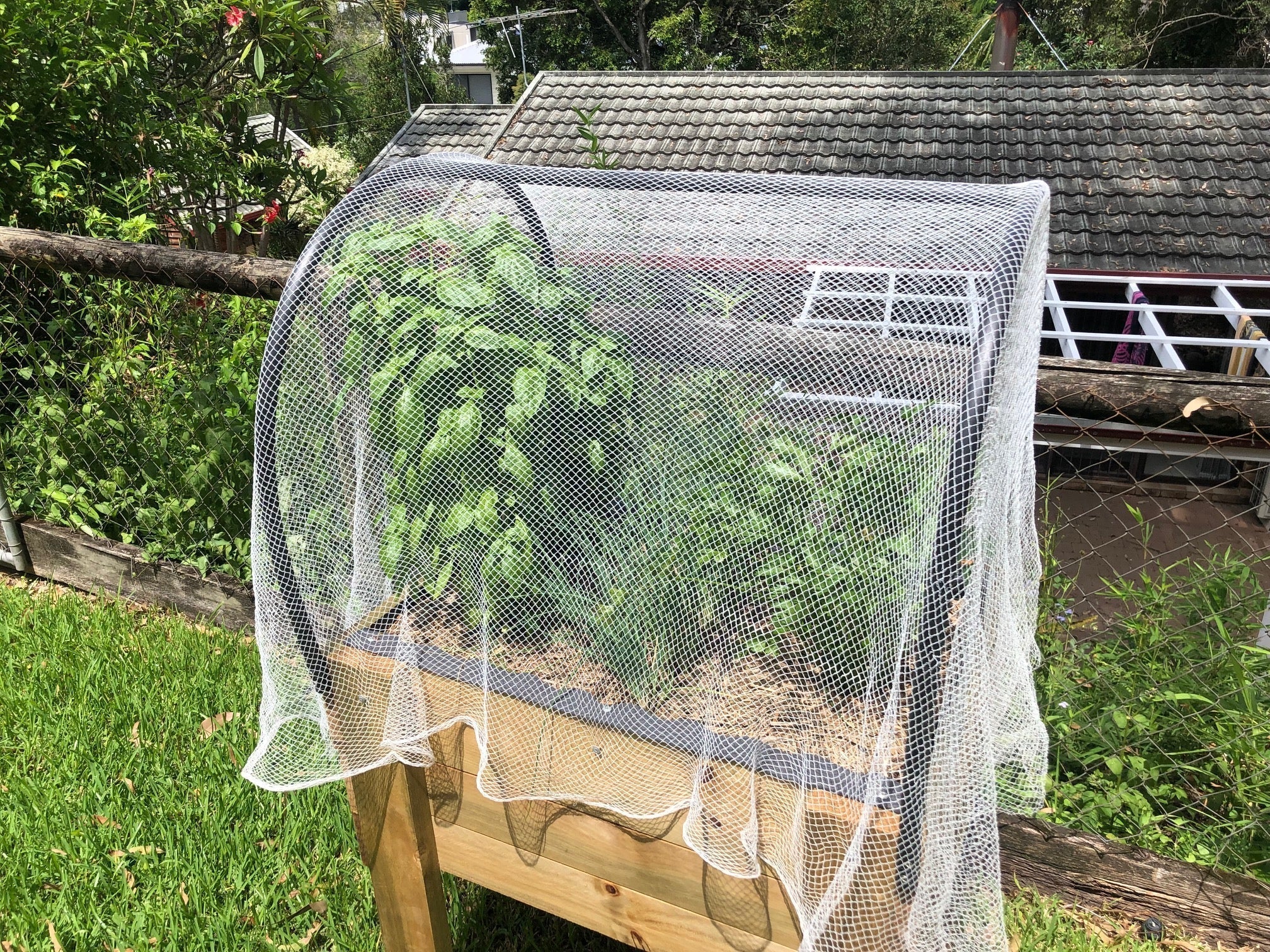
So, you’ve set up your Corrogarden and your seedlings are popping up—and then the birds arrive. Or the cabbage moths. Or the neighbourhood brushtail possum.
Protecting your harvest is the difference between a fridge full of greens and a pile of stalks. But what is the best way to do it without turning your backyard into a tangled mess of plastic?
In this guide, we break down why you should cover your bed, how to do it safely for local wildlife, and a Step-by-Step DIY Poly Tunnel Kit you can build for under $75.
Why should I cover my raised garden bed?
A garden cover isn't just a fence; it’s a microclimate manager. In the harsh Australian sun (especially here in Brisbane), a "Hood" or "Poly Tunnel" does three things:
-
Reduces Evaporation: By breaking the wind, the potting mix stays moist for longer.
-
UV Protection: A fine mesh acts like a light "sunscreen" for sensitive leafy greens like lettuce and spinach.
-
Peace of Mind: You can go to bed knowing your broccoli won't be a skeleton by morning.
What pests will a garden cover keep away?
The Corrogarden Poly Tunnel is designed to stop the "Big Three" Australian garden wreckers:
-
Cabbage White Butterflies: The fine 5mm mesh stops them from landing and laying the eggs that become those hungry green caterpillars.
-
Birds & Bush Turkeys: No more "scrub turkeys" digging out your expensive mulch or crows pecking your tomatoes.
-
Possums: A taut, secure net is the only 100% effective way to stop a hungry possum in an urban area.
What pests can't it keep away?
Honesty is the best policy: a net won't stop everything. Ground-dwelling pests like slugs, snails, and slaters can get into any cover, no matter how sealed it is. You will still need your beer traps or organic pellets for the "crawlers," but the "flyers" and "climbers" are officially locked out.
How do I protect birds and animals when using netting?
In many parts of Australia, using old-style wide-mesh netting is now illegal—and for good reason. Birds, bats, and lizards get tangled in large holes and can't escape. To keep your garden Wildlife Friendly, follow these rules:
-
The Finger Test: Only use 5mm mesh or smaller. If you can poke your finger through it, it's a hazard.
-
Keep it Taut: Use a Ridge Rail (Spine) to keep the net tight like a trampoline. Animals bounce off a tight net; they get tangled in a loose one.
-
Choose White Netting: It is much more visible to nocturnal animals like flying foxes.
What do I need, and what does it cost?
We’ve designed this "Pro" DIY kit to be flush with your garden bed, meaning it won't add any extra width if you have beds butted together.
The Shopping List
| Item | Compact (81cm x 60cm Bed) | Standard (157cm x 60cm Bed) | Approx. Unit Cost |
| 19mm PN12.5 Poly Pipe | 5m Coil | 10m Coil | $18 - $32 |
| 20mm Galvanised Half-Saddles | 4 Units | Units | $0.80 ea |
| 19mm Barbed Poly Tee | 2 Units | 2 Units | $2.00 ea |
| 19mm Barbed Poly Cross (+) | Not Required | 1 Unit | $2.50 ea |
| 5mm Wildlife-Friendly Netting | 2.5m x 2.5m | 4m x 2.5m | $15 - $25 |
| Stainless Steel Screws | 1 Small Pack | 1 Small Pack | $6.00 |
| Total Estimated Cost | ~$48.00 | ~$72.00 |
How do I build it? Step by step
Step 1: Mount the Clips
Screw two 20mm Half-Saddles vertically onto each end of the timber frame. Position them so they are flush with the corners. This ensures your poly tunnel stays perfectly in line with the bed.
Step 2: Prepare the Hoops
Cut your 19mm Poly Pipe into 5 x 75cm lengths (for the larger 157cm long Corrogarden).
-
The Pro Tip: Cut each hoop in half and join them back together using the Barbed Tee. This Tee is where your "Spine" will sit later.
Step 3: Insert the Hoops
Slide the ends of your hoops into the metal saddles. If you used the PN12.5 (High Density) pipe, it will be stiff—this is good! It creates a rock-solid arch. Drive a single screw through the saddle and into the pipe to lock the height.
Step 4: Install the Ridge Rail (The Spine)
Measure the distance between your two hoops (approx. 81cm). Cut a piece of poly pipe to fit and click it into the open ends of your Barbed Tees. This "spine" prevents the hoops from leaning and keeps the net taut.
Step 5: Secure the Netting
Drape your 5mm mesh over the frame. Pull it tight and secure it to the timber using "Netting Clips" or simple heavy-duty staples. Leave one side loose or use "Hook and Loop" tape for easy access to your veggies.
Don't want to hunt for parts?
While you can find most of these parts at a hardware store, we know finding the right size can be a headache.
Skip the hoops altogether: our Grow Frame raised garden bed comes with a timber frame built in, so the same 5mm wildlife-friendly net goes straight over the top and pulls tight on the rails. Not in South East Queensland? The Grow Frame kit ships Australia wide.
More garden guides: insect netting pros and cons · deterring possums · how to build a raised bed
What should I plant right now? Our free garden calendar shows what suits your postcode this month — and which pests to watch for. Ready to grow? Browse our raised garden beds or design yours with the garden bed builder.