



← Back to the Garden Trouble Calendar
Most birds in the garden are on your side (see insect-eating birds). A few want the same things you do: the strawberry the day it turns red, the tomato the day before you pick it, and the seedlings you planted yesterday. Native birds are protected, so the goal is to keep them out, not to hurt them, and the way that works every time is a net on a frame.
Growing any of these? See our guides to strawberries, blueberries, raspberries, tomatoes and lettuce.
Which birds do the damage?
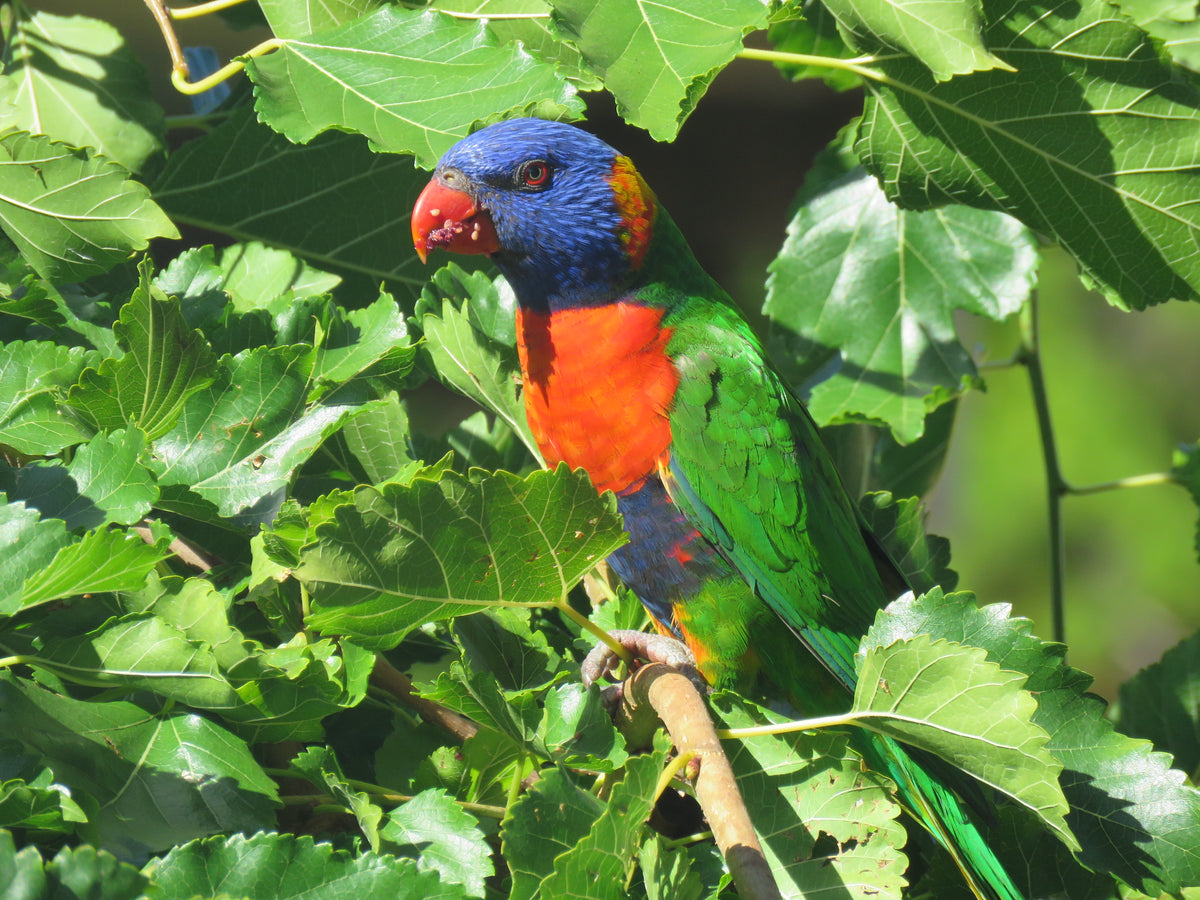
- Fruit eaters. Silvereyes, lorikeets and currawongs go for soft fruit as it ripens: strawberries, blueberries, raspberries and tomatoes.
- Seedling nippers. Bowerbirds and cockatoos snip off young lettuce, peas and brassicas.
- Diggers. Brush turkeys rake mulch and potting mix out of a bed in a morning. They have their own guide.
- Night shift. Flying foxes aren't birds, but they raid fruit after dark and they're the reason netting rules exist.
How do I know it's birds?
- Fruit pecked open or half eaten, often from the top, with the rest left hanging.
- Seedlings snipped off or pulled up and left lying on the bed.
- Damage that happens in daylight. Possums and rats work at night.
- Droppings on the bed edges and leaves.
What actually works?
- Net the bed on a frame. A net held up on a frame keeps beaks off the fruit (birds peck straight through a net lying on the plants), stays taut so nothing gets tangled, and lifts up when you want to pick. A raised garden bed is the easiest thing in the yard to net, because it has a solid edge to fix to.
- Get the timing right. Leafy greens and seedlings can be netted from the day you plant. Fruit the bees pollinate (strawberries, blueberries, raspberries) gets netted once flowering is done, before the fruit colours. Don't wait for the first raid; birds come back to a crop they've found.
- Pick promptly. Ripe fruit left hanging is an invitation. Tomatoes picked as they blush finish ripening on the bench.
- Use scare tactics for a week or two at most. Shiny tape and fake owls work briefly, then the birds get used to them. Move them every few days if you use them.
If you're buying a bed anyway, our Grow Frame raised garden bed has a timber frame built in, 1.8 m tall, so a bird net goes straight over the top with no hoops, stakes or poles. Outside South East Queensland it comes as the Grow Frame kit, with a 1.6 m frame, shipped Australia wide. Our Grow Frame ideas page has the net size for each bed.

Grow Frame: a raised garden bed built to take a net
All four legs run up to a timber top rail, 1.8 m tall delivered in South East Queensland or 1.6 m as a kit shipped Australia wide. Throw a bird net over the top, staple insect mesh to the sides or screw aviary mesh into the bays. It comes bare, so you only buy the cover your pests need.
What net should I use?
A wildlife-safe one. The Queensland Government recommends a knitted net with holes smaller than 5 mm x 5 mm when stretched, strands at least 500 microns thick, in white so flying foxes can see it at night. In Victoria, netting home fruit and veggies with anything bigger has been against the law since September 2021.
- The finger test. If you can poke a finger through it, the holes are too big.
- Keep it taut. Animals bounce off a tight net and get tangled in a loose one.
- Fix it at the bottom. Peg it, weigh it down with bricks or staple it to the bottom board so nothing crawls underneath.
- Check it every day. If anything is caught, don't try to free it yourself. Cover it with a towel and call RSPCA Queensland on 1300 ANIMAL (1300 264 625), or your local wildlife rescue.
What should I avoid?
- Cheap wide-hole netting. It traps and kills birds, bats, snakes and lizards.
- Thin monofilament netting, which tangles easily.
- A net left lying loose on the ground after the crop is done. Roll it up and store it.
- Poisons, glue or anything else that harms birds. They're protected, and the insect-eaters among them do your pest control for free.
For the rest of the patch, see our guide to managing pests safely. If it's digging rather than pecking, brush turkeys are the likely culprit.
Plan your patch: our free garden calendar shows what to plant now where you live. Ready to grow? Browse our raised garden beds or build your own with the garden bed builder.
Image: Calistemon, CC BY-SA 4.0, via Wikimedia Commons.